Queue Management System in Pakistan: 2026 Smart Guide
Banks, hospitals, and government offices across Pakistan share one stubborn problem: crowded, unpredictable waiting lines. A queue management system in Pakistan solves that by giving every visitor a defined place, a clear wait estimate, and a calmer experience, while giving managers hard data to plan around. In 2026, as digital identity and cashless services expand nationwide, organized queuing has become a practical necessity rather than a luxury.
This guide takes a slightly different route than most. Alongside the queuing basics, it explores how biometric verification is now woven directly into the waiting-line experience, from Lahore banking halls to Karachi service counters. The goal is a faster, more secure visit for everyone.
The Real Cost of an Unmanaged Line
An unmanaged line is expensive in ways that rarely show up on a balance sheet. Customers abandon visits, staff scramble reactively, and complaints pile up on social media. Worse, you lose the demand data you need to fix any of it.
Structured queuing flips that dynamic. It converts every arrival, service, and departure into a measurable event, so a branch manager can finally answer simple questions: When do we peak? Which counter is slowest? How many customers walked away today?
Signs your organization needs a queuing platform
- Customers frequently ask, “How much longer?”
- Staff cannot predict busy hours from week to week.
- Complaints center on waiting rather than the actual service.
- You have no reliable record of daily footfall.
If two or more of these sound familiar, a modern queue management system in pakistan will pay for itself quickly through recovered visits and smoother staffing.
How Queuing Works, Step by Step
The flow is straightforward once you see it laid out. Understanding the sequence helps you evaluate vendors against your real needs rather than a feature checklist.
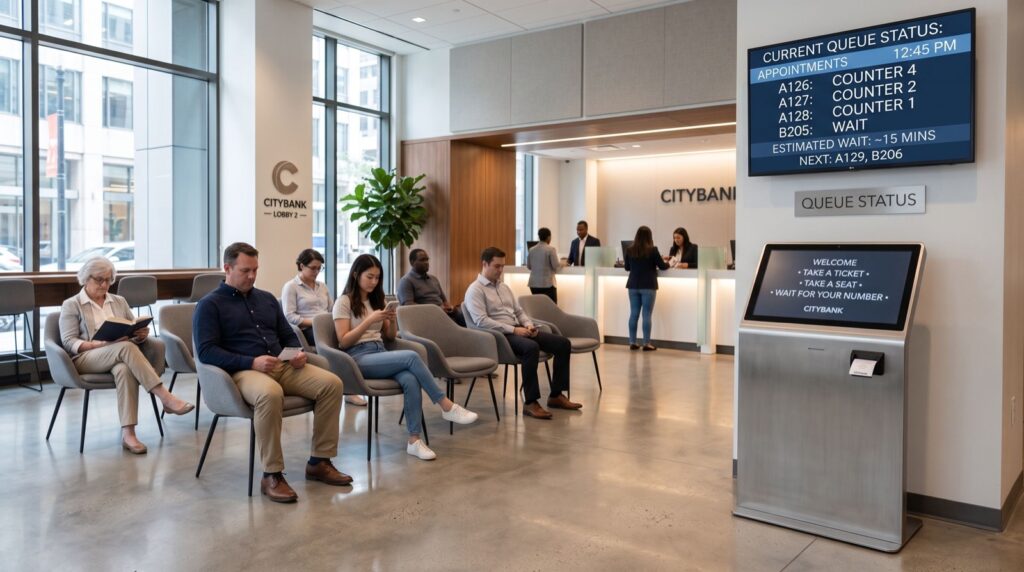
- The customer takes a ticket at a kiosk or scans a QR code.
- The system assigns a position and an estimated wait.
- Screens and audio call the customer to the correct counter.
- Staff serve, transfer, or recall as needed.
- Every step is logged for the analytics dashboard.
How does queuing reduce crowding in a busy branch?
It reduces crowding by removing the need to physically stand and guard a spot in line. With a ticket or virtual queue, customers can sit or step away, and the lobby empties out. Real-time alerts also prompt supervisors to open extra counters before a crowd forms, which keeps flow steady during peak hours.
Where Biometrics Meet the Waiting Line
Pakistan’s push toward verified digital services means many counters now confirm identity before delivering a transaction. Fingerprint scanners are the fastest, most reliable way to do that at scale, and they slot neatly into the queuing workflow.
A compact device such as the Secugen Hampster Pro 20 lets staff verify a customer in seconds right at the service counter. When verification is quick and accurate, the transaction finishes faster, which shortens the queue for everyone behind them.
Why accuracy matters
Biometric standards are not arbitrary. The U.S. National Institute of Standards and Technology maintains rigorous evaluations of fingerprint recognition performance, and you can read about its work at the NIST fingerprint recognition program. Choosing well-tested scanners means fewer failed reads and less friction at the counter.
Feature Comparison: Choosing the Right Setup
The table below maps three configurations to typical Pakistani deployment scenarios in 2026.
| Feature | Basic Queue | Queue + Biometric | Enterprise Suite |
|---|---|---|---|
| Ticketing | Kiosk | Kiosk + QR | Kiosk + QR + app |
| Identity verification | None | Fingerprint | Fingerprint + records link |
| Wait estimates | Basic | Yes | Predictive |
| Reporting | Counts | Service levels | Multi-branch SLA |
| Best fit | Small office | Bank, telecom | Government, chains |
Turning Wait-Time Data Into Better Decisions
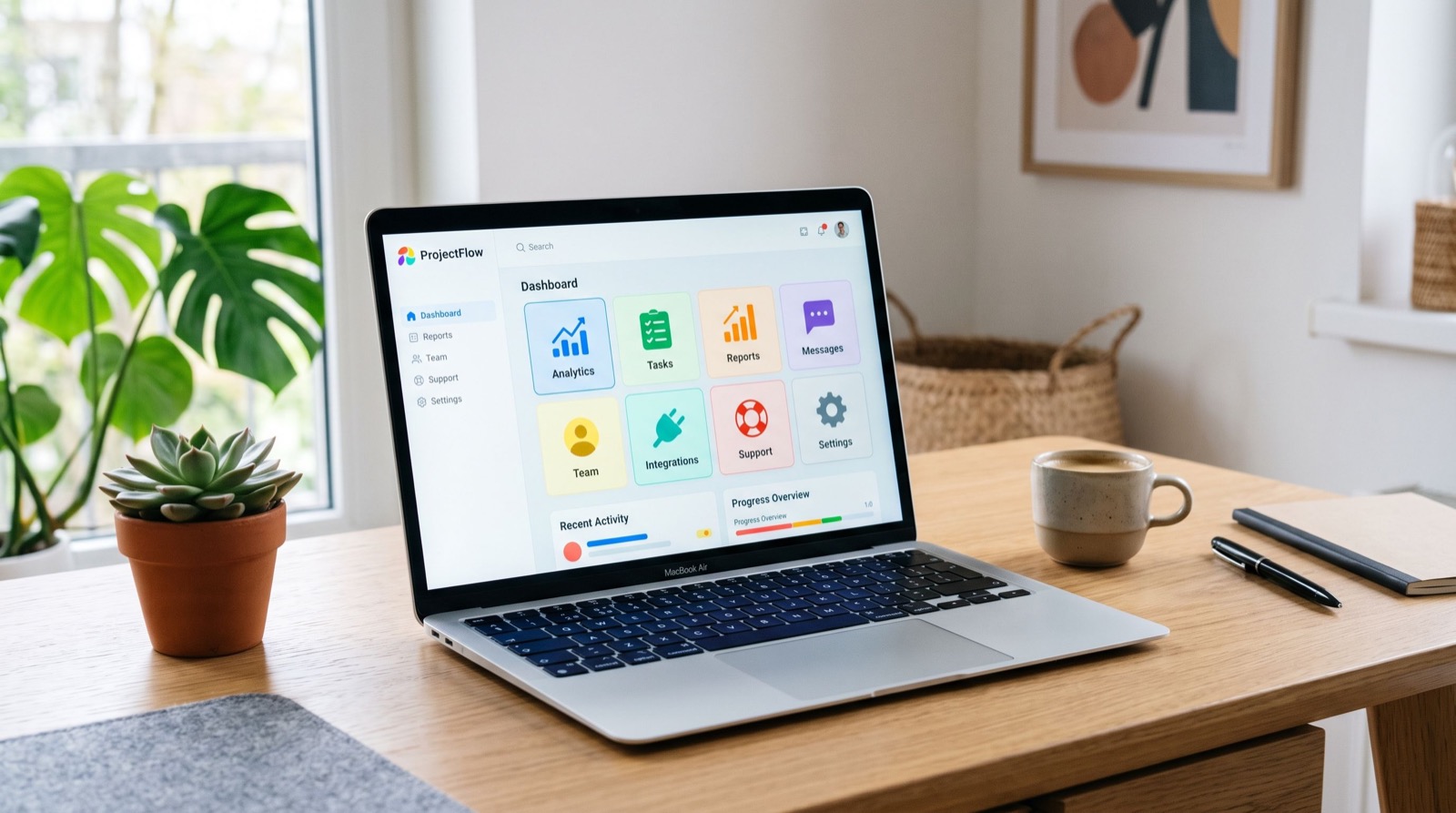
The dashboard behind a queuing platform is where the long-term value lives. Every ticket and transaction becomes a record you can analyze, and those records answer questions that used to be pure guesswork. You discover your true peak hours, your slowest service types, and the exact days when abandonment spikes.
Armed with that evidence, branch managers stop staffing by habit and start staffing by demand. A bank might shift two tellers to the lunch rush, while a telecom outlet opens a dedicated device-support counter on weekends. In 2026, this data-driven planning is what separates organizations that merely install technology from those that genuinely improve their customer experience.
Do not overlook the human side
Technology only helps if staff embrace it. Involve frontline teams early, explain how the system makes their day easier, and celebrate the metrics that improve. A queuing rollout that treats staff as partners rather than subjects almost always outperforms one imposed from the top down.
A Practical Rollout Plan
The biggest mistake operators make is deploying everywhere at once. A staged approach protects your budget and lets you refine the workflow before it scales.
Begin with your single busiest branch, run it for a month, and study the data. Adjust routing rules, counter assignments, and biometric checkpoints, then replicate the proven setup across the network. Choosing trusted professionals who handle hardware, software, and staff training together keeps that phased rollout smooth and predictable.
Frequently Asked Questions
Do customers need a smartphone to use the queue?
No. Kiosks issue printed tickets for anyone without a phone, while smartphone users can scan a QR code or use an app for a virtual ticket. Offering both ensures no customer is excluded, which matters in a diverse market like Pakistan.
Is fingerprint verification secure enough for banking?
Well-tested biometric scanners provide fast, reliable identity confirmation and are widely used in financial and government settings. Selecting devices validated against recognized standards keeps false reads low and protects the customer.
Can the system work across multiple cities?
Yes. Enterprise queuing platforms centralize reporting, so an organization can compare branch performance in Lahore, Karachi, and Islamabad from one dashboard and standardize service levels nationwide.
How quickly will we see results?
Most branches notice calmer lobbies and clearer data within the first few weeks. The bigger structural gains, like optimized staffing and lower abandonment, build over the first quarter as you act on the analytics.
Conclusion
A queue management system in Pakistan does more than shorten lines; it brings order, data, and secure verification together into one smoother visit. Start with a single-branch pilot, pair queuing with reliable biometric checks where identity matters, and expand only what the data proves. In 2026, the organizations that respect their customers’ time will earn loyalty that competitors cannot easily win back. Ready to modernize your counters? Speak with a specialist and plan your first deployment today.